
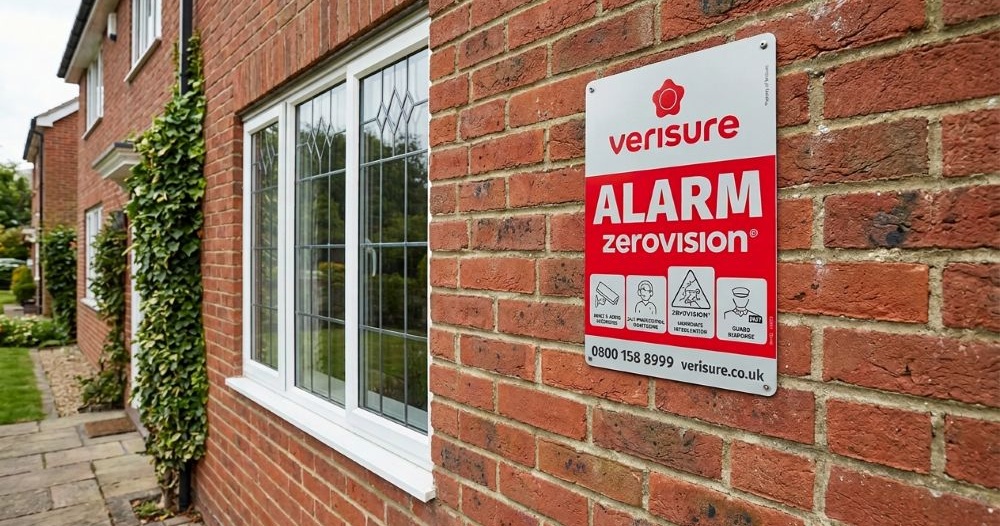
Do I need a CCTV sign at home? Understanding UK surveillance signage laws
You only need a CCTV sign at home in the UK if your cameras record beyond your private property (e.g. a public path, shared access, or a neighbour's garden). In these cases, UK data-protection law requires you to display a clear sign explaining that CCTV is in use, why the footage is being recorded, and who is responsible for the system.
This article provides straightforward, practical guidance on when security camera signage is required under UK law, what information it must include, and how UK data protection and CCTV compliance converge.
Installing home security cameras has become increasingly common as homeowners look for effective ways to protect their property and loved ones. However, many people remain uncertain about the legal responsibilities that come with using these systems, particularly when it comes to signage and privacy regulations.
Understanding these requirements not only helps you stay on the right side of the law, but also promotes transparency with neighbours and visitors, offering greater peace of mind for everyone involved.
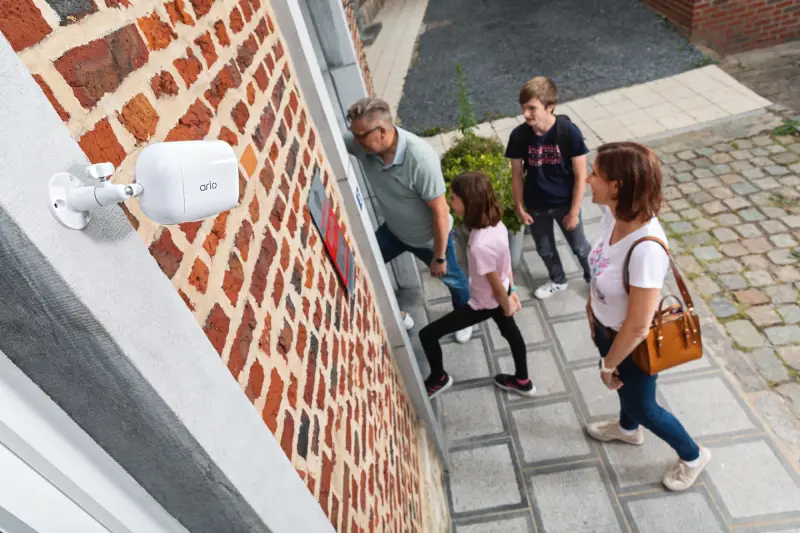
Do you need a CCTV sign at home in the UK?
The short answer: yes, if your cameras record beyond your property boundary (for example, a public path, a neighbour's garden, or a street view).
If the cameras are purely for domestic use and stay entirely within your property (for example, inside your home or capturing only your private garden with no public access), then you may be exempt from signage obligations under the Data Protection Act 2018 and Information Commissioner's Office (ICO) guidance.

Why CCTV signs matter
1. Personal data and compliance
When you record footage of areas where others may be caught on camera, you are processing personal data. The ICO states you must give fair processing information, such as through a sign near the camera. This sign helps satisfy the requirement to inform people of the recording.
2. Deterrent effect against potential intruders
A CCTV sign is much more than legal box-ticking. It visibly communicates to visitors, passers-by or would-be intruders: you are being recorded. Studies show that visible surveillance signage can reduce property crime, or at least change the behaviour of offenders.
In England and Wales, police recorded 222,304 burglaries in the year ending June 2026, down 6% on the year before. That’s still more than 600 a day, so burglary remains a real risk, and visible deterrents and cameras are a sensible precaution.
3. Promotes trust and good neighbour relations
When your home surveillance system is clearly signposted, visitors, neighbours, delivery people, and guests are aware that they may fall within camera view. This helps build trust, avoids surprises, and minimises privacy complaints. Signage demonstrates you are acting responsibly, not covertly.
What must a CCTV sign include?
If your system requires signage, it should include the following key elements:
- A clear statement that recording is taking place (e.g. "CCTV in operation" / "Video surveillance in progress").
- The purpose of recording (e.g. "For the purposes of security and crime prevention").
- Contact details of the system owner or other responsible party (this is especially important if the cameras record public or shared spaces).
- Statement about how the data will be used or stored (optional but recommended).
- Use simple, visible language and placement close to the camera zone or entrance, so that people can see it before entering the recorded area.
It's also advisable to use signage that is durable, large enough to be noticed, placed at eye-level, and positioned where visitors would naturally pause - like a gate entrance, driveway, or front door.
Where to place CCTV signs at home
To maximise both legal compliance and deterrent effect, consider the following placement tips:
- At your front gate or main entrance to your property, ideally before the camera view begins
- At driveway or garden access points, if you have cameras covering those spaces
- Within shared or communal access zones (for example: in an apartment building's lobby or stairwell), if applicable
- Ensure the sign is visible at eye level, not tucked away or hidden behind foliage, plants, or other obstructions
- Place multiple signs if your cameras cover more than one access or boundary area. You should ensure anyone entering the surveillance zone sees one
Making sure signs are obvious reinforces that you are actively and responsibly managing surveillance.
CCTV sign requirements: home, flat, and business signage rules
Private homes
If your cameras only monitor your internal rooms or the immediate private garden, and no external areas that are accessible by others, then signage may not be strictly required under the Act - but it is still recommended.
If your cameras record public spaces, neighbours' gardens, shared driveways, or the street, then you must display a sign, as you are capturing footage of third parties.
Flats and apartments / multi-occupancy buildings
Private cameras inside an apartment: if an individual flat occupant installs a system solely covering their unit and garden, then similar rules to a private home apply.
Shared or common areas (e.g., lobby, stairwell, car park): the building management or landlord is responsible. Signage must be placed to cover the shared access zone.
Pre-installation, the building should have had a residents' meeting (or equivalent) and clarified storage lengths, purpose and controller identity. The signage should reflect this.
Businesses or landlords
Anywhere cameras are recording in access zones open to the public or shared with others (e.g. landlord-run entrance, communal driveway, reception area), you need clear signage.
The sign must specify who is controlling the system, the purpose (security), how long footage is kept, and contact details for queries or rights requests.
It's best practice to keep records of image retention, your purpose justification, and how you handle data subject rights (e.g. deletion, access), aligning with ICO guidance.

Understanding the law behind CCTV signage in the UK
The Data Protection Act 2018 implements the UK's version of the GDPR (General Data Protection Regulation). Together, they form the backbone of data privacy law in the UK.
When you install CCTV that records individuals outside your private space, you become a data controller, meaning you're responsible for ensuring fair, lawful, and ethical processing of that data.
Under these laws, fairness and transparency are essential. That's why CCTV signs are required. They act as the "short privacy notice".
The ICO CCTV guidelines explain that anyone recorded by a CCTV system should be able to tell:
- Who is using the footage (the data controller)
- Why is the footage being recorded?
- How to contact the person or organisation responsible
ICO guidance in practice
The Information Commissioner's Office (ICO) provides clear CCTV guidelines for domestic CCTV users.
You must:
- Use CCTV for a legitimate purpose, such as home security
- Avoid excessive or unnecessary recording (e.g., zooming into neighbours' windows)
- Put up clear signage so that anyone captured knows recording is happening
- Store footage securely and limit access to only those who need it
- Delete recordings when they are no longer needed
These steps show responsible ownership; the difference between a compliant homeowner, and one who might accidentally breach data laws.
Balancing home security and privacy
A frequent question from homeowners is: "What if I need to protect my property but also respect privacy?"
The answer lies in balance: a principle shared across the UK's Data Protection Act and European privacy frameworks.
- Minimise what you record: only capture what's necessary for security.
- Inform clearly: signs and verbal communication are essential.
- Secure the data: use encrypted devices and restricted access.
- Review regularly: audit what your cameras capture and adjust angles.
This balance reassures your neighbours, and aligns with the ICO's "privacy by design" principle - designing your system to respect privacy from the start.

How long can you keep CCTV footage?
Under the UK GDPR, you can only keep footage for as long as it's necessary for the stated purpose (e.g., security). The ICO recommends regular deletion, and typically, most domestic systems keep footage for 7-30 days.
Longer retention should only happen when:
- You're investigating a specific incident (e.g. a break-in)
- Law enforcement requests access for evidence
Automatic overwriting is encouraged, and any manual storage should be encrypted or password-protected. If your cameras record beyond your private boundaries, this retention policy becomes a legal obligation, not just a recommendation.
Read our complete guide, "How Long Can You Keep CCTV Footage? Understanding UK Storage Laws".
What are the penalties for non-compliance?
Failure to display appropriate signage, or otherwise comply with data-protection obligations, can carry serious consequences. The Information Commissioner's Office can investigate complaints regarding CCTV misuse or insufficient notices. In more severe or repeated breaches, it may issue enforcement notices or fines.
But here's the good news: compliance is straightforward and affordable. In many cases, the only additional step is placing a correctly-worded sign and ensuring you've thought through the placement and purpose of your system. This not only reduces legal risk, but also strengthens your deterrence and neighbour-relations case.
Common mistakes homeowners make
Even with the best intentions, homeowners sometimes fall foul of CCTV law. Here are the most frequent errors, and how to avoid them:
- Not displaying any sign, despite recording a public or shared area.
- Poor sign placement - hidden behind hedges, too small, or placed after someone has already entered the camera's field.
- Capturing excessive areas such as roads, parks, or neighbouring windows.
- Storing footage indefinitely without purpose or security.
- Sharing footage publicly (e.g. on social media) without consent or a legitimate reason.
Remember, compliance isn't just about avoiding fines - it's about respecting privacy and acting responsibly, as a neighbour and citizen.
Domestic vs. public recording: why boundaries matter
Understanding the boundary between domestic and public recording is essential for knowing when CCTV signs are required. The legal threshold is simple: if your cameras capture identifiable individuals outside your private property, you become a data controller, and must meet data-protection obligations, including displaying clear signage.
Purely inside your property
If your system records only inside your home or within a private garden that no one else can access, the footage is considered purely personal. In this case, you're generally exempt from the Data Protection Act, and signage isn't mandatory - though still useful as a deterrent.
Capturing beyond your boundary
Many external cameras (such as doorbell cameras, driveway cameras, and those placed at garden gates) naturally capture part of a public path, shared access point, or neighbouring property. Once this happens, the domestic exemption no longer applies, and signage becomes legally required.
To stay compliant and maintain good neighbour relations, the ICO recommends:
- Adjusting camera angles to minimise unnecessary capture, and using privacy masking tools offered by modern systems.
- Communicating openly with neighbours if cameras might cover shared or adjacent areas.
These steps help prevent disputes and support a transparent, responsible approach to home surveillance.
How Verisure helps homeowners stay compliant
At Verisure, we understand that installing a CCTV-powered security system involves more than just cameras. We provide:
- Professional installation to ensure cameras are correctly placed and angles are legally appropriate (e.g. avoiding filming public footpaths unless necessary).
- Clear CCTV signage included with the system; properly sized, worded, and visible.
- Secure, GDPR-compliant video storage and access management, aligning with the Data Protection Act 2018.
- Advice and guidance to ensure you meet your obligations, giving you reassurance and helping your security system become a visible deterrent.
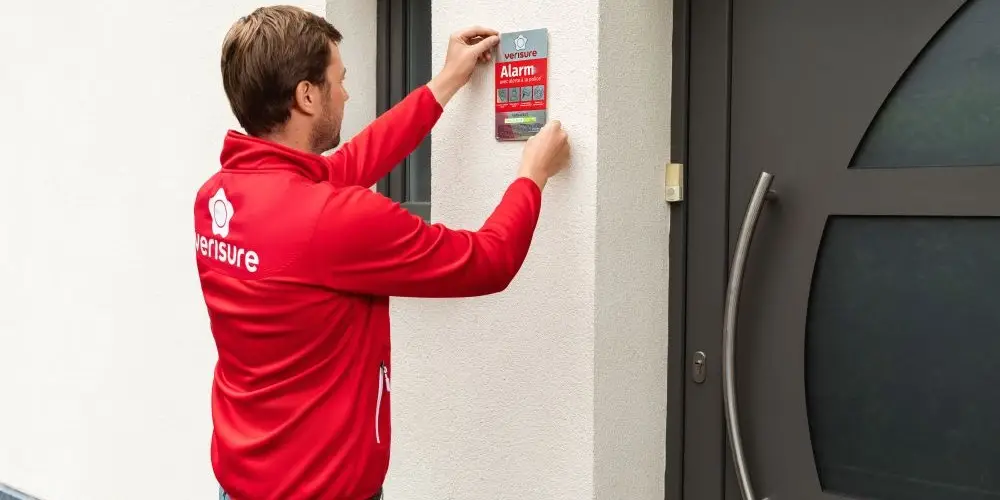
Designing effective CCTV signs
Many homeowners underestimate how much difference a well-designed sign makes. Beyond compliance, design influences how effective the sign is at deterring crime.
| Element | Recommendation | Purpose |
|---|---|---|
| Size & visibility | Minimum A4 for entrances; large enough to be read from several metres. | Ensures notice before entering the area. |
| Contrast | Black or dark text on a yellow background is standard in the UK. | Improves legibility and deterrent effect. |
| Content | "CCTV in operation for the purpose of crime prevention and public safety." | Meets ICO and DPA wording expectations. |
| Symbols | Include a camera icon or bold header like "CCTV in operation." | Quick visual recognition. |
| Placement | Eye level, near access points, before the camera zone begins. | Legal compliance and visual deterrence. |
FAQs
A home CCTV sign should clearly inform that recording is happening, state the purpose (such as crime prevention), provide contact details of the system owner or data controller (if applicable), and ideally note how footage is processed/stored. It should use clear and simple language and be placed visibly.
Place a sign at your main entrance (gate or front door) before the camera's field of view begins. Also, place signs at any driveway or garden access covered by the cameras. The sign should be at eye level or slightly above, unobscured, and easily noticed by anyone entering the zone.
Yes, you can print your own signs, provided they meet the visibility and informational criteria (clear wording, appropriate size, good placement). However, many homeowners prefer professionally printed signs, or to use signs provided by their installer, to ensure compliance and durability.
Yes, evidence suggests that visible surveillance plus signage helps deter property crime. For example, UK research indicates that CCTV in active locations may reduce property crime by measurable amounts.
Stay compliant with CCTV warning signs for homes
Home security isn't simply about cameras - it's about visibility and reassurance. A well-placed CCTV sign is not just a legal tick-box; it's your first line of defence, and a way of showing you take safety seriously, for you, your family, and your neighbours.
In the UK, if your cameras record areas beyond your property boundary, you must ensure signage and other data-protection requirements are met. If you're unsure, consulting a professional installer, such as Verisure, is the best way to ensure your home or business security systems stay on the right side of the law.