









Beyond Sight
Exclusive technology from Verisure that detects intruders using Wi-Fi signals where cameras can't.
- Detects Beyond Camera Blind Spots
- Additional Intrusion Verification
- Verisure Exclusive
- Wi-Fi Human Presence Detection


Understanding Beyond Sight:
How Wireless Signals Detect Movement
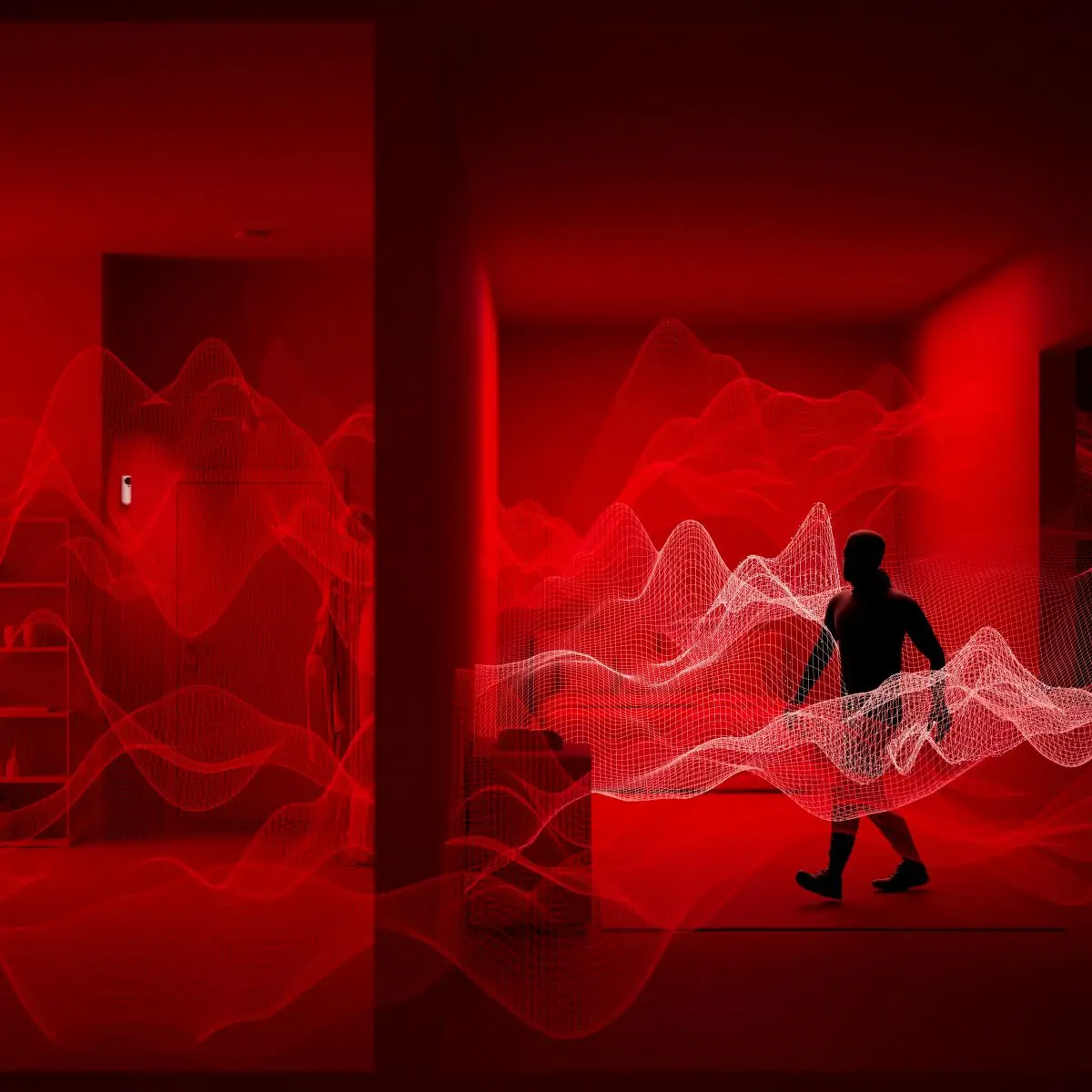
It does this by analysing changes in the Wi-Fi signal environment caused by the reflections and interactions due to movements from objects and people in the Wi-Fi signal path.
Wi-Fi signals are transmitted
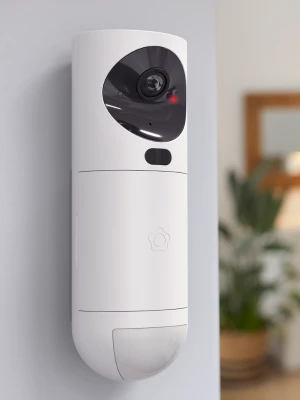
Once the alarm is activated, both the main unit and the camera detector emit Wi-Fi signals to monitor activity within the home.Signals interact with movement
When these signals encounter a person moving, they are disturbed. The resulting changes are then sent back to the main unit for processing.Movement is interpreted
The main unit examines variations in the signal—such as changes in strength, phase, and timing—and translates these patterns into detected movement.Movement is verified
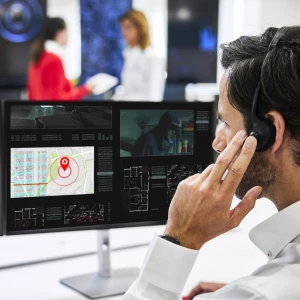
When your alarm is triggered, our Alarm Receiving Centre (ARC) receives data from your system that details whether movement has been detected.Our Experts Take Action
Fast response enabling rapid presence detection.How Beyond Sight Protects Your Home
Enhanced alarm verification
Alongside photos and video, Beyond Sight gives alarm operators an additional tool to more accurately assess alarms when they are triggered.
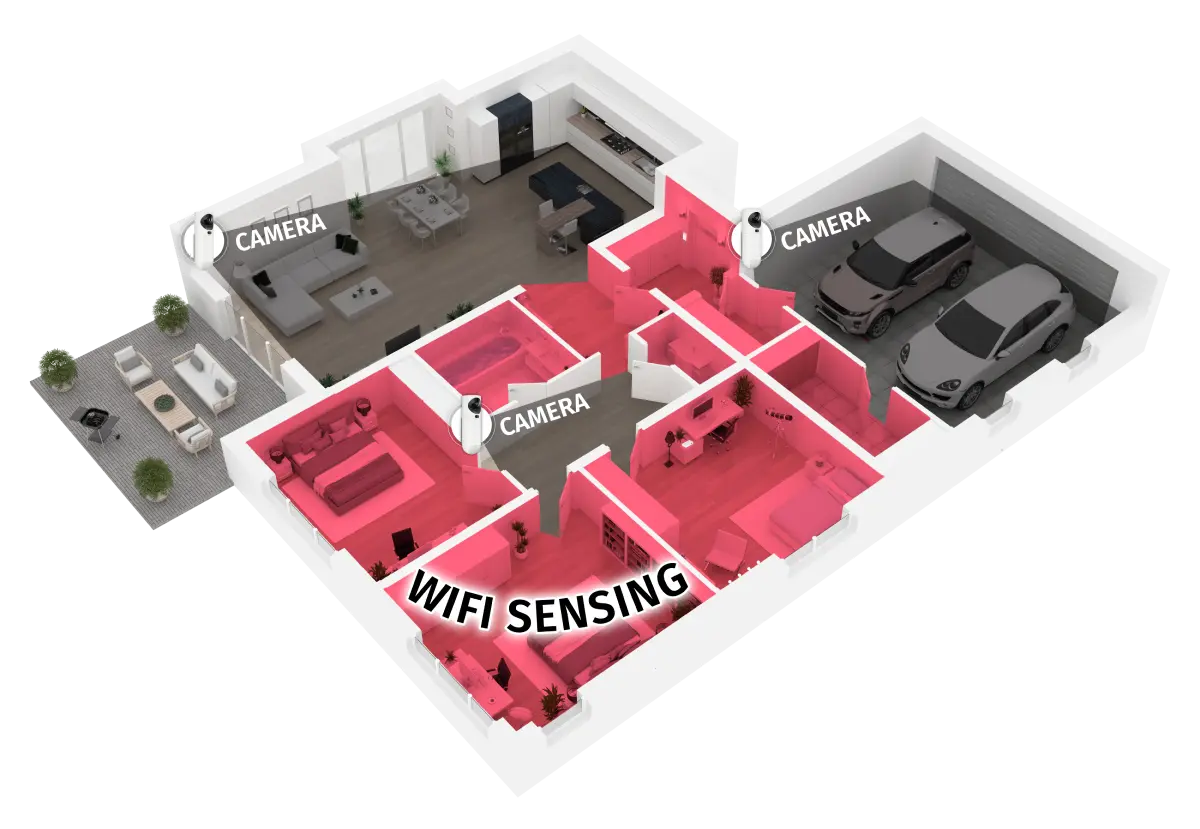
Broader home coverage
Beyond Sight can detect activity in areas that cameras might miss, such as blind spots or spaces beyond the camera’s range, helping operators get a fuller picture of the situation.
Short, targeted monitoring
The system only activates signals for 30 seconds, during which any detected movement is sent to the Alarm Receiving Centre for evaluation and appropriate response.
Privacy outside of alarms
When your alarm is triggered, the Alarm Receiving Centre will be able to access the logs for Beyond Sight once they've verified and taken action on your alarm.
Intruder detection can assist in blind spots
Verisure assists even in blind spots of your home.
Beyond Sight enables faster, more accurate verification and a reduction in false alarms.
- Assists Blind Spots: Beyond Sight detects motion in areas that are not covered by cameras in your property by detecting changes in Wi-Fi signals in those areas.
- Rapid Response: After your alarm is triggered, Beyond Sight will send a notification to our alarm receiving centre (ARC) confirming whether or not motion has been detected by Beyond Sight, which helps them verify the alarm trigger and take the right action.
- Respect Your Privacy: Beyond Sight is only used when the alarm is triggered. This technology can be used in areas of the home where you would prefer not to have camera, such as a bedroom.
Frequently Asked Questions
How does Beyond Sight work?
Technology from Verisure that detects intruders using Wi-Fi signals where cameras can't. It does this by analysing changes in the Wi-Fi signal environment caused by the reflections and interactions due to movements from objects and people in the Wi-Fi signal path.
Here's how Wi-Fi sensing works:
- Wi-Fi Signals: The Verisure Gateway emits radio waves (Wi-Fi signals) to provide wireless connectivity to Verisure Wi-fi enabled cameras. These signals travel through the air and can bounce off objects and people.
- Signal Reflections: When a Wi-Fi signal encounters an object or person, it can reflect off them in various directions. The signal's strength and phase change as it interacts with these objects.
- Signal Analysis: The Beyond Sight system continuously monitors the changes in signal characteristics, such as signal strength, phase, and timing and with an algorithm transforms that into an understanding of “movements”.
- Motion Detection: The system analyses the amplitude and duration of signals to detect movement and whether the activity should be forwarded to the Verisure Alarm Receiving Centre for assessment.
Does it require any special equipment?
The hardware required for Beyond Sight is already included as part of Verisure's Red Dot award-winning product design within its home security system, meaning no additional hardware is required.
Can Beyond Sight penetrate all types of walls (old houses, load-bearing walls, etc.)?
No, the technology is based on standard Wi-Fi signals and it will have the same propagation limitations as standard Wi-Fi connections i.e. it will have a challenging time penetrating thicker walls (concrete, bricks, tiles, etc.).
Detection performance, including coverage of potential blind spots, varies based on environmental and installation-specific factors such as materials, layout, and device placement.
Your security expert will be able to guide you as to how Beyond Sight will operate in your home.
Is it resistant to cyber-attacks?
All Wi-Fi sensing signals are transmitted and managed with the same security standards applied to our existing Verisure alarm signals. The Verisure Security team is involved in the development of Beyond Sight to minimise the risk of introducing new vulnerabilities to our system.
Does it detect falling people?
No - Beyond Sight cannot detect if someone has fallen. It's unable to differentiate between types of movement, or whether that motion was caused by a person falling or an intruder entering the property. It will identify that there was movement - but not detect what caused the movement.
How is the signal processed for remote monitoring?
During an incident, the Alarm Receiving Centre (ARC) is alerted. The alert will contain the Wi-Fi sensing session result for each applicable node in the alarm system.
Does it cover every room in the house?
There is no guarantee that Beyond Sight will reach to every area of your home, and some surfaces are more difficult to penetrate, or cause fluctuations in radio signals that can prevent Beyond Sight operating correctly.