
Special Offer: Free Arlo Essential XL Spotlight Camera Installation with installation of a Verisure Alarm System with ZeroVision device.* (*)Offer applies to standard installation only. Monthly monitoring fees apply and vary by package. Equipment remains property of Verisure. Available to new residential customers only. Promotion valid until 28th September 2026. Geographical restrictions apply. Terms and Conditions apply.
Offer ends on: 28th September 2026
Special Offer: Free Arlo Video Doorbell with installation of a Verisure Alarm System with ZeroVision device.* (*)Offer applies to standard installation only. Monthly monitoring fees apply and vary by package. Equipment remains property of Verisure. Available to new residential customers only. Promotion valid until 26th October 2026. Geographical restrictions apply. Terms and Conditions apply.
Offer ends on: 26th October 2026
Are smart locks secure?
Depending on the model and providing you’re using them properly, smart locks are just as secure as traditional ones, and sometimes even more so.
Smart locks offer security benefits that normal ones don’t. A burglar is unlikely to attempt to pick a smart lock, and if it is paired with a solid deadbolt, it will be really hard to bypass. Verisure’s LockGuard smart locks have an anti-picking cylinder as well as an auto-locking feature to further secure your property. They also come with remote access from your smartphone so you can check whether your door is locked or not.
Some models of smart locks alert you when someone enters your home. For smart locks that work with biometrics (for example with fingerprint, voice, or face recognition), you can even find out who is locking or unlocking the door.
The LockGuard can detect when your lock is being tampered with and is supported by a shock sensor that triggers your home alarm in the event of an intrusion. Alerts are sent to the 24/7 Verisure Alarm Receiving Centre, which will respond appropriately within 45 seconds.
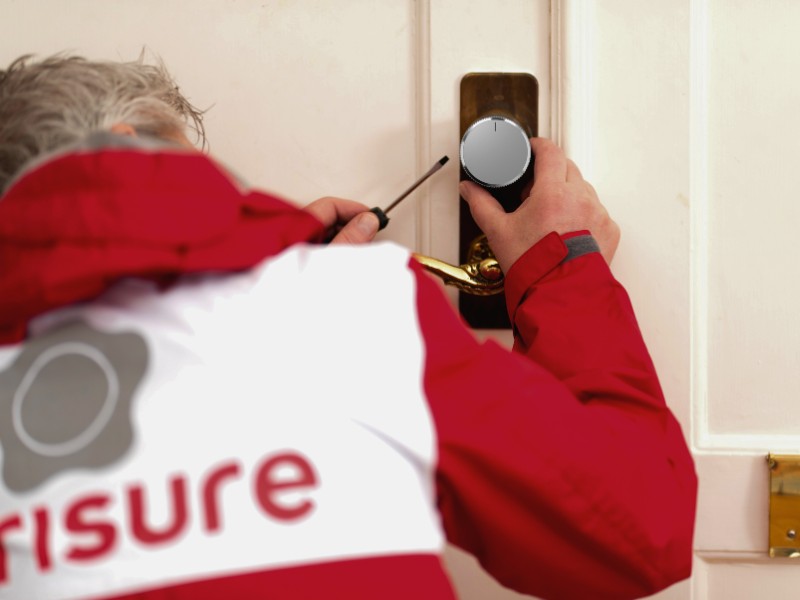
For households with multiple occupants or rental properties, smart locks with a PIN code reduce the risks that come with having many copies, as you can change the access combination as often as you wish without having to replace the whole lock.
However, it’s worth noting that smart locks have some security drawbacks, such as the fact that some rely on wireless connections such as Wi-Fi or Bluetooth. If these connections are down, you might find yourself unable to use some features of your smart lock such as remote access, although that shouldn’t affect your ability to lock or unlock it.
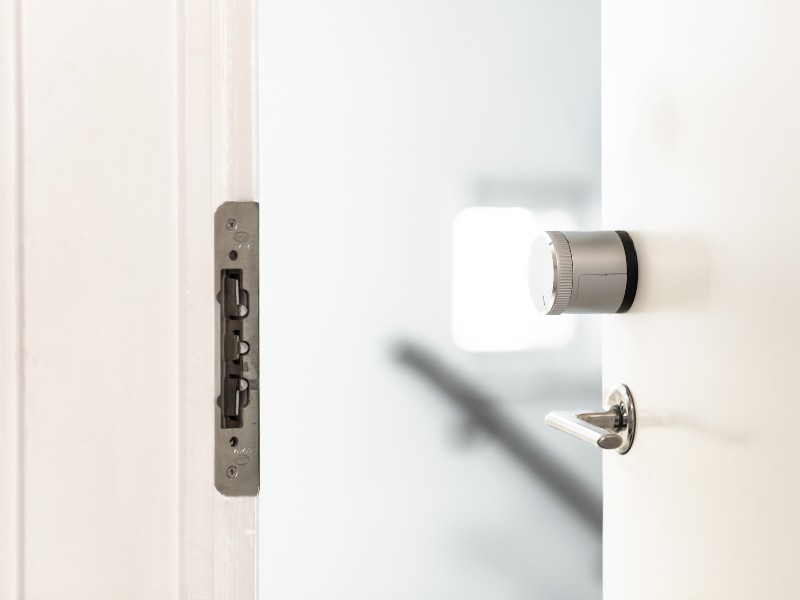
Likewise, if there is a power outage or if your smart lock’s battery dies, you could find yourself stuck. That said, most smart locks including LockGuard come with a manual backup such as a key which lets you lock or unlock the door even in the event your power is down.
Because they are digital, smart locks could also be prone to being hacked, but that risk is relatively minimal compared to that of burglaries and breaking and entering. To reduce the risk of someone hacking into your lock, make sure you regularly update the software it comes with and set a strong password on your smartphone app and Wi-Fi router. You could also enable two-factor authentication (2FA) on the app linked to your smartphone to add an extra layer of protection.
Encrypted Secure Cloud Storage
All alarm images are encrypted and stored in secure cloud storage.
