
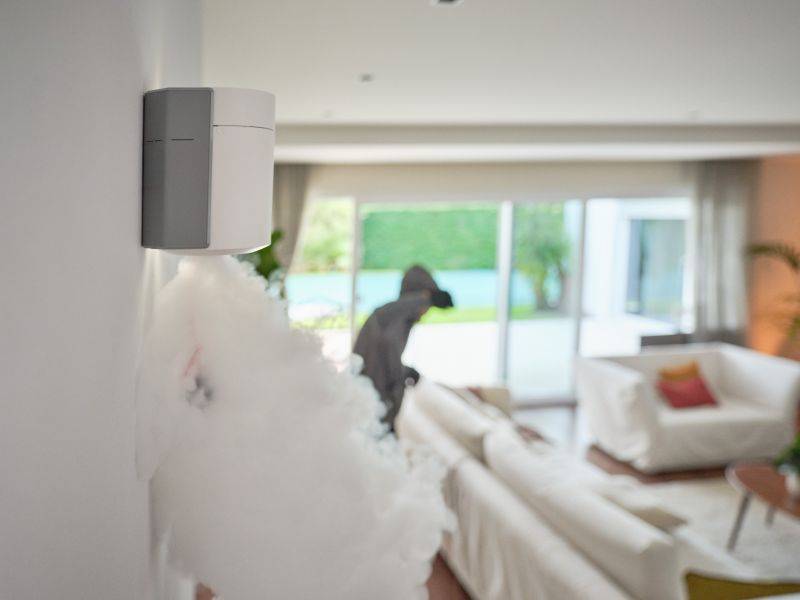
How effective are burglar alarms really? The definitive guide
While statistics show burglaries are gradually declining across the UK, recent data from the Office for National Statistics estimates that over 245,000 domestic and non-residential burglaries took place in the year ending March 2025.
Many property owners are concerned with home security, and may be asking themselves just how effective burglar alarms are. In this guide, we break down how burglar alarms work, explain the different types of alarm systems you could take out, and look into all the ways they can be effective deterrents for potential intruders.
We also outline the potential pitfalls or issues with burglar alarms and detail how best to use them for maximum effectiveness, as well as how to choose the best burglar alarm system for your home.
How do burglar alarms work?
“Burglar alarm” is a broad term which refers to home security systems with an alarm or siren. This system tends to include a central unit, a control panel to arm and disarm it, some sensors and/or monitoring equipment such as cameras, and a siren unit.
All of the devices in a burglar alarm system are connected, so if one of the sensors, detectors or cameras is triggered, a signal is sent to the central unit, which in turn triggers the siren to alert you and your neighbours of an intrusion.
If the security system is professionally monitored, the information will also be sent to a 24/7 Alarm Receiving Centre and assessed by highly-trained professionals, who will respond accordingly. This could include dispatching a team of security guards, alerting the police or medical services, depending on the nature of the emergency.
What are the different types of burglar alarms?
As mentioned above, there are many types of systems that could be construed as burglar alarms, which vary either in their installation, their features, or the devices they are composed of.
For a start, not all burglar alarms are made up of the same elements. At the core of most systems, you’ll find a central unit, which is like the brain or router behind your whole alarm, and some kind of siren unit, which will emit a loud, blaring noise in case any of your sensors or cameras detect an intrusion. You’ll also tend to find a keypad which allows you to arm or disarm your alarm. From there, you can tailor your burglar alarm to the needs and specificities of your property.
Popular devices include motion sensors, which detect changes in heat around a room to identify intruders, and door and window shock sensors which identify impacts on the entry points of your property. Verisure’s GuardVision photo detector uses infrared night vision and photo burst capture to take images of intruders. You may also choose to add indoor or outdoor security cameras as an added layer of protection.

Nowadays, most security systems are “smart burglar alarms”, meaning they can be connected to other devices such as phones or laptops, but also integrated into smart home ecosystems such as Google Home or Amazon Alexa. This means you can be alerted instantly on the devices of your choice in the event of a breach, and arm or disarm your system remotely from your mobile phone.
You can choose between a wired or wireless burglar alarm system, which as their names imply, vary in that the devices in the former are linked via cables and tend to be mains-powered, while the latter functions without wires. Wireless burglar alarm systems are made up of battery-powered devices which send each other information digitally, without the need for cables to run all around your home.
Some burglar alarm systems are self-monitored, meaning any triggered sensor will activate the alarm, and send a notification to your phone or chosen connected device. If you have security cameras as part of your system, you can also check the live feed from your device, wherever you are in the world.

Professionally-monitored systems allow you to do all of those things, but also guarantee an immediate response from a dedicated, 24/7 Alarm Receiving Centre where trained professionals can dispatch security guards and alert law enforcement if the situation calls for it. They are more secure, but also more expensive than their unmonitored counterparts.
How do burglar alarms deter criminals?
Burglar alarms can deter potential intruders in a variety of ways.
Their simple appearance on the front of a property could be enough to dissuade burglars from targeting it, which is why it is recommended to add a deterrent sign to the facade of your home. This reminds potential unwanted visitors of the risks of entering your home, from setting off a siren to alerting security guards.

Outdoor cameras, especially those equipped with motion-activated lights, are also great deterrents as they expose anyone approaching your home, making it easier for the cameras to identify them.
If the visual cues aren’t enough to ward off intruders, then a burglar alarm is designed to repel them at various points during a break-in.
The door and window shock sensors mentioned above should be placed at all the entry points of your home so you can be alerted as soon as someone even attempts to enter your property. Provided your system is armed, any time one of these sensors is triggered, the siren unit should emit a loud noise and send an alert to you and the Alarm Receiving Centre.
Likewise, indoor cameras and PhotoDetectors should use their infrared night vision and heat sensing capabilities to detect intruders, collect evidence and send it off to ARC for assessment.
Cameras equipped with motion sensors also trigger your siren unit when your system is armed and they detect unusual movement. The two-way audio feature on the Arlo cameras supplied as part of Verisure burglar alarm systems enables you to listen and speak to intruders at a distance, so you can inform them that security guards and the police have been alerted.
The drawbacks of burglar alarm systems, and how to overcome them
While it’s easy to think putting a deterrent sign and a camera on the front of your home means you’re never going to be the target of an intrusion, it is often not the case.
Arming your property with any kind of alarm system could confer you with a potentially dangerous false sense of security. As such, it’s important to be aware of the common pitfalls of burglar alarms and how to mitigate them so your property is as secure as it can be.
- Human error
A burglar alarm is only as reliable as the human charged with arming it is; if the system is not armed, it’s not protecting your home beyond external deterrent signs. To avoid leaving your home unprotected, we’d recommend setting a reminder on your phone or written down in an obvious place so you can minimise the risk of forgetting to arm your burglar alarm.
- Poor installation
No matter how good a burglar alarm system is, an installation fault could render it useless. For example, a wrong connection could mean your devices are either not connected to each other, or not connected to Wi-Fi. A camera or sensor installed in the wrong place (with a limited field of view or blockers such as walls or furniture) could render them less effective than intended.
To counteract this, Verisure burglar alarms are professionally installed; a professional will design your system with you, using their expertise to optimise the placement of each of your devices, and make sure everything works perfectly and you understand your system before they leave your property.

- Power or Wi-Fi outages
Whether they are wired or wireless, burglar alarms are susceptible to power cuts or broadband dropouts. While these are obviously hard to avoid entirely, Verisure burglar alarm systems are equipped with features designed to keep you protected in the event of power or connection outages.
The central unit at the heart of Verisure systems is mains-powered but has a minimum 48-hour battery backup which ensures it keeps running even when it loses power. Verisure burglar alarms also have different connection methods to minimise the risk of downtime in the event your broadband is disrupted, giving you the option to connect your devices via mobile data (4G).
- False alarms
Even if your system is installed and armed properly, you may not be immune to false alarms. For example, your outdoor cameras could pick up passers by and animals roaming and mistake them for intruders, and your motion sensors could detect your pets or children moving around.
As Verisure burglar alarms are professionally monitored, every trigger will be thoroughly analysed by highly-trained staff at the Alarm Receiving Centre before any security protocol is put in place. Footage received from your cameras, which are equipped with infrared night vision for extra clarity, will be carefully reviewed before security guards are dispatched and police alerted to avoid the risk of false alarms.
Choosing the most effective burglar alarm system
Once you’ve decided to equip your property with a burglar alarm, you’ll need to decide what type is best suited to meet your security needs. You don’t have to do this alone, however; a Verisure professional will be on hand to conduct a home assessment and recommend which devices you should opt for and why.
Research from Nottingham Trent University has shown that combining a range of security devices and features is by far the most effective deterrent for burglars. As such, we’d recommend choosing devices which are more focused on deterrence (external deterrent signs, visible outdoor cameras with motion-activated floodlights) and combining them with others that will help you mitigate intrusions (door and window sensors, photo detectors, a siren unit, etc).
You’ll also need to consider where you live, as choosing a burglar alarm for a detached house or a flat are very different things, as well as choosing between wired and wireless systems, professional or self-monitoring, and whether you want a professional to come and install your burglar alarm for you.
Need help deciding? Get in touch with our security experts today to book a home assessment.
RELATED ARTICLES


With over 245,000 burglaries recorded in the UK last year, burglar alarms remain a key part of home security. This guide explains how burglar alarms work, the different systems available, and how they deter intruders through visible warnings, sensors, cameras and professional monitoring. It also outlines common drawbacks and how to overcome them, helping homeowners choose the most effective alarm system for their property.