
Special Offer: Free Arlo Essential XL Spotlight Camera Installation with installation of a Verisure Alarm System with ZeroVision device.* (*)Offer applies to standard installation only. Monthly monitoring fees apply and vary by package. Equipment remains property of Verisure. Available to new residential customers only. Promotion valid until 28th September 2026. Geographical restrictions apply. Terms and Conditions apply.
Offer ends on: 28th September 2026
Special Offer: Free Arlo Video Doorbell with installation of a Verisure Alarm System with ZeroVision device.* (*)Offer applies to standard installation only. Monthly monitoring fees apply and vary by package. Equipment remains property of Verisure. Available to new residential customers only. Promotion valid until 26th October 2026. Geographical restrictions apply. Terms and Conditions apply.
Offer ends on: 26th October 2026
Which types of properties are best suited to fitting a smart lock?
Smart locks are great home security devices for most properties.
A smart lock works by replacing your door lock or part of your lock with a digital locking system, doing away with the need for a physical key. Instead, depending on the model, they can be connected to a smartphone app and locked and unlocked remotely, operated by a PIN code or a fob, or using biometric information (either fingerprint, face or voice recognition).
As they are non-invasive security devices, smart locks are suitable for any property type, from flats and terraced homes to semi- and fully-detached houses. Unlike an outdoor camera, which could encroach on your neighbours’ privacy, a smart lock only impacts your front door.
Smart locks are also a great fit for Airbnbs or guest houses, as the lack of a physical key avoids the risk of having them stolen and copied. Rental property owners often opt for PIN code-operated smart locks, as they can change the access code any time a new guest checks in without having to change the whole door lock. Verisure’s LockGuard smart lock can be unlocked with a security code, a fob or the Verisure app, so rental property owners have plenty of options when it comes to giving guest access to the property.
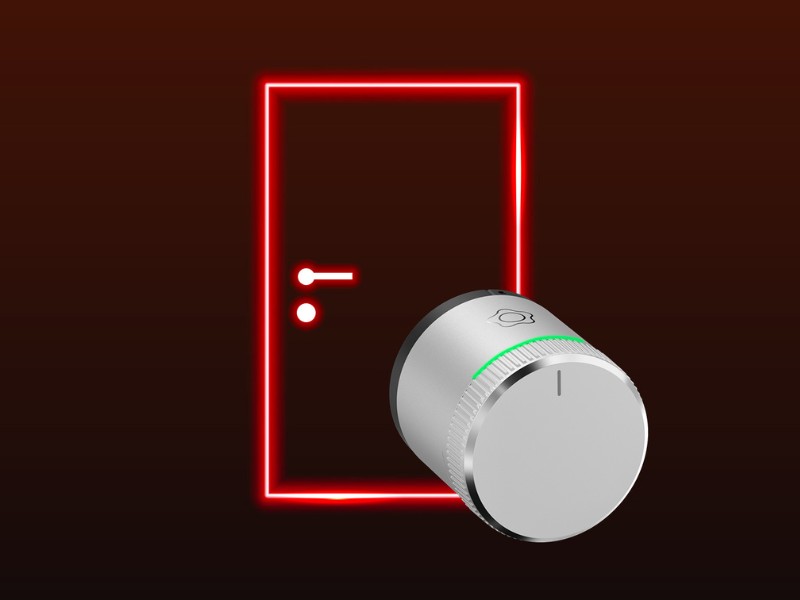
One thing to note is some smart locks rely on a wireless connection to run, whether that’s Bluetooth, Wi-Fi or other networks such as Zigbee. As such, homes in more remote areas where a strong broadband connection is not guaranteed may want to opt for a lock that does not require a Wi-Fi connection to run. That said, most smart locks will function just fine without Wi-Fi, but you may not be able to tap into their monitoring features or remote access.
Because installing a smart lock could be considered a modification of your property, we’d primarily recommend them for homeowners. If you are a renter and want to install a smart lock, check with your landlord or property manager first. You can also find out more in our Best home security systems for renters guide.